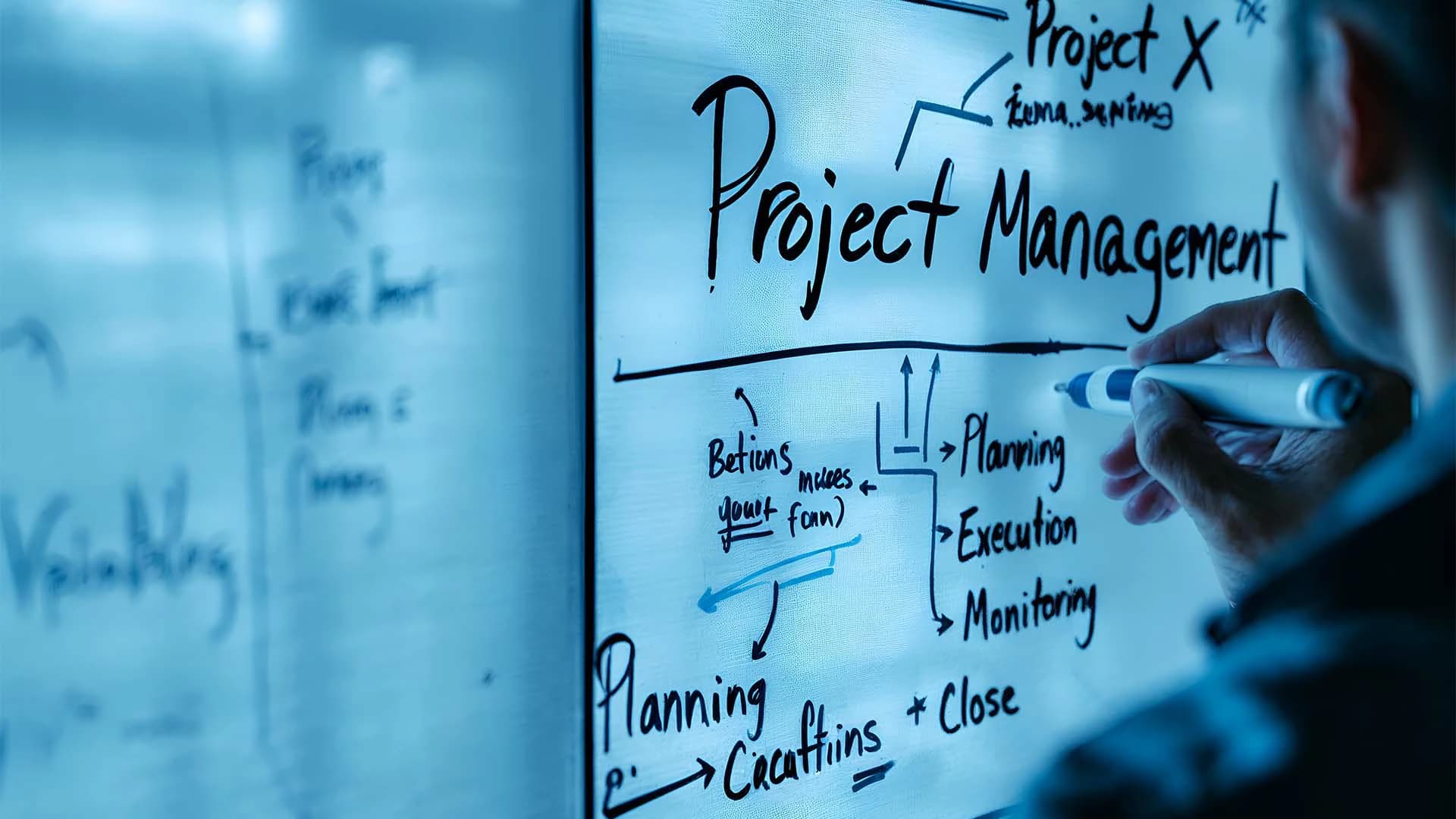
Agile project management: everything you need to know
Learn what agile project management is
Agile project management has become a widely adopted approach for organisations seeking greater flexibility, faster delivery, and stronger collaboration in today’s dynamic business environment. Agile project management focuses on adaptability, continuous improvement, and close teamwork, allowing companies to respond effectively to change while maintaining control over project objectives and outcomes.
At London Optimum Training & Consultancy (LOTC), we help organisations understand and apply agile methodology through practical frameworks that support efficient planning, execution, and delivery. By mastering agile project methodology, teams can improve the agile development process, streamline the agile workflow, and enhance decision-making throughout the project lifecycle.
Through structured learning and expert-led guidance, organisations gain the skills needed to implement effective agile sprint planning, leverage modern agile management tools, and build confident teams capable of delivering consistent business value across a wide range of projects.
What Is Agile Project Management?
Agile project management is an adaptive project management approach that focuses on flexibility, continuous improvement, and close collaboration between teams and stakeholders, enabling organisations to deliver value in incremental and efficient stages.
Why Agile Project Management Works for Modern Businesses?
Agile project management supports modern businesses by enabling faster responses to change, improving transparency and communication, reducing delivery risks, and ensuring that projects remain aligned with evolving business goals and customer expectations.
Agile methodologies and frameworks
Agile methodologies and frameworks represent the practical foundation of agile project management, providing organisations with proven approaches to manage complex projects in dynamic environments. Rather than relying on rigid plans, these methodologies focus on adaptability, continuous improvement, and delivering value incrementally throughout the agile development process.
At their core, agile frameworks are designed to support efficient collaboration, transparency, and rapid decision-making. They define how teams organise work, manage priorities, and respond to change through structured yet flexible workflows. This structure enables organisations to establish a clear agile workflow while maintaining the freedom to adjust scope, timelines, and resources as business needs evolve.
Common agile frameworks are widely adopted across industries because they improve visibility, accountability, and stakeholder engagement. They encourage frequent review cycles, close cooperation between teams and leadership, and ongoing alignment with strategic objectives. As a result, organisations using agile methodologies are better equipped to manage risk, optimise performance, and sustain long-term business value through effective agile project management practices.
The Agile Development Process
The agile development process is an iterative and flexible approach to delivering projects, focusing on continuous improvement, early value delivery, and close collaboration between teams and stakeholders. Instead of following a fixed plan from start to finish, agile work is delivered in short cycles known as sprints, allowing teams to review progress regularly, respond to feedback, and adjust priorities as business needs evolve. This process supports transparency, faster decision-making, and improved alignment between project outcomes and organisational goals.
What is the difference between agile methodology and waterfall methodology?
Project Structure:
Agile follows an iterative and incremental structure, while Waterfall relies on linear and sequential phases.
Flexibility to Change:
Agile allows high flexibility, and changes can be made throughout the project. In Waterfall, changes are difficult after a phase is completed.
Stakeholder Involvement:
Agile requires continuous stakeholder involvement and regular feedback, whereas Waterfall has limited involvement after the initial planning stage.
Delivery Approach:
Agile delivers value through frequent, small releases. Waterfall delivers the final product in a single release at the end of the project.
Risk Management:
In Agile, risks are identified and addressed early. In Waterfall, risks are often discovered late in the project lifecycle.
Best Use Case:
Agile is best suited for dynamic, complex, or fast-changing projects. Waterfall is more suitable for stable projects with fixed and well-defined requirements.
Pros & Cons of Agile Project Management for Companies
Agile project management offers significant advantages for companies operating in fast-changing and competitive environments, but it also presents certain challenges that organisations should consider before adoption.
On the positive side, agile project management enables companies to respond quickly to change, improve collaboration across teams, and deliver value faster through iterative development. Regular feedback loops enhance transparency, reduce project risk, and help align outcomes with business priorities. Agile also supports continuous improvement, making it particularly effective for innovation-driven and customer-focused organisations.
However, agile may not suit every company or project. It requires strong communication, experienced teams, and active stakeholder involvement, which can be challenging in highly regulated or hierarchical environments. Without clear governance, agile projects may face scope creep or inconsistent documentation. For this reason, companies often need structured training and expert guidance to implement agile practices effectively and maximise long-term business impact.
Is Agile project management right for your team?
Agile project management can be highly effective for teams that operate in dynamic environments, manage evolving requirements, and value collaboration and adaptability. If your team works on complex projects, needs frequent stakeholder feedback, or aims to deliver incremental results rather than a single final outcome, agile project management may be a strong fit.
However, agile is most successful when teams are empowered, communication is open, and leadership supports flexible decision-making. Teams that lack experience, clear ownership, or structured processes may struggle without proper guidance. In such cases, investing in an agile project management course can help teams understand agile principles, adopt the right agile workflow, and apply practical tools that align agile practices with organisational goals.
Best Agile Project Management Courses at London Optimum
- Agile PM Mastery for Software Companies
- Agile PM Practitioner
- Agile PM with Kanban
- Disciplined Agile Coach Certification (DAC)
- Disciplined Agile Scrum Master Certification (DASM)
- Disciplined Agile Senior Scrum Master Certification (DASSM)
- Disciplined Agile Value Stream Consultant Certification (DAVSC)
- PMI Agile Certified Practitioner (PMI-ACP)
- Six Sigma Agile
Why Choose London Optimum (LOTC) for Agile Project Management Training
London Optimum Training & Consultancy (LOTC) supports organisations in adopting agile project management through high-level, practical training designed for real business environments. Our programmes focus on helping teams and leaders understand agile principles, apply effective agile methodologies, and build sustainable workflows that improve delivery, collaboration, and decision-making.
With a strong focus on corporate and organisational needs, LOTC delivers training led by industry experts who combine strategic insight with hands-on experience. Whether organisations are starting their agile journey or refining existing practices, our agile project management course options are structured to align agile approaches with business objectives, operational realities, and long-term performance improvement.
FAQs about Agile Project Management:
1- What is project management agile?
Agile project management is a flexible approach to delivering projects through short, iterative cycles that focus on collaboration, continuous improvement, and early value delivery. It allows teams to adapt quickly to change while maintaining alignment with business goals.
2- What are the 5 phases of agile project management?
The agile project management process typically includes five continuous phases: concept, initiation, iteration, release, and review. These phases support ongoing planning, regular feedback, and incremental delivery throughout the agile development process.
3- What is Agile vs. Scrum in project management?
Agile is a broad project management philosophy that promotes flexibility and adaptability, while Scrum is a specific framework within agile project management. Scrum applies agile principles using defined roles, events, and sprint-based workflows.
4- Which is better, PMP or agile?
Neither approach is universally better. Agile project management works best for complex, fast-changing projects, while traditional methods may suit stable projects with fixed requirements. Many organisations adopt hybrid approaches based on their operational needs.
5- What is an example of an agile project?
An example of an agile project is developing a digital platform where features are delivered incrementally through sprints, allowing stakeholders to review progress regularly and refine requirements based on feedback.
6- What's the difference between agile & waterfall?
Agile uses iterative development and continuous feedback, while the waterfall methodology follows a linear, sequential process. Agile offers greater flexibility and faster adaptation, whereas waterfall relies on detailed upfront planning.
7- Which Agile project management certification is best?
Professionals typically develop agile skills through hands-on experience, structured learning, and practical agile project management course programmes that focus on applying agile principles, workflows, and tools in real business environments.
8- What Are Agile Management Tools?
Agile management tools support planning, collaboration, and progress tracking within the agile workflow. Common tools include digital task boards, sprint planning tools, backlog management systems, and visual dashboards that enhance transparency and team coordination.
Contact London Optimum on WhatsApp at 07553430145 for tailored advice.