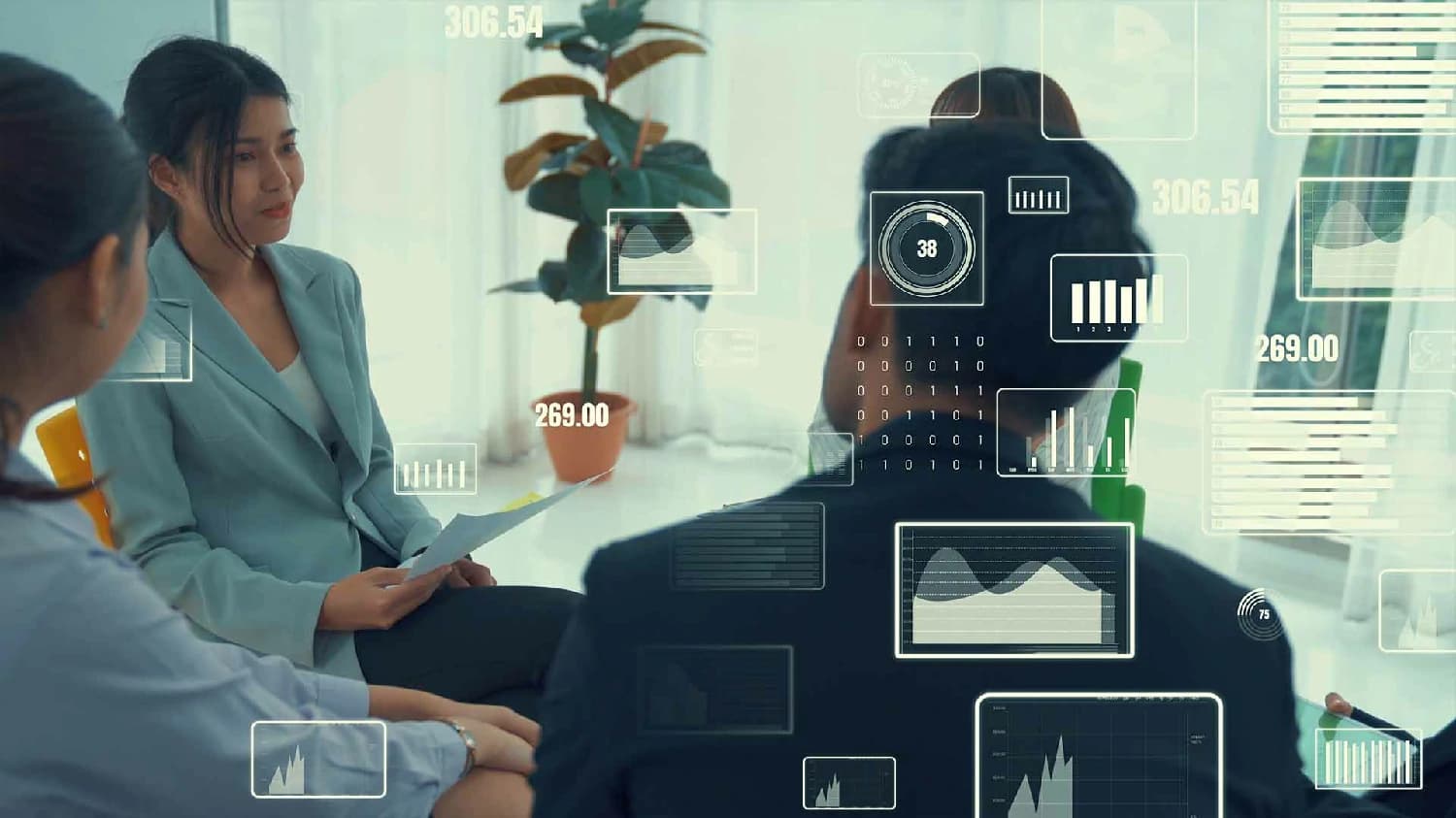
AI for HR: Applications, HR Analytics, Automation & Training
8 min
Mar 8, 2026
What Is AI for Human Resources?
<p><strong>AI for human resources</strong> refers to the use of advanced technologies and <a href="https://londonoptimum.com/ai-and-digital-transformation/ai-in-hr-operations"><strong style="text-decoration: underline;">artificial intelligence in HR</strong></a><span style="text-decoration: underline;"> </span>to improve how organisations manage people, data, and talent decisions. Instead of relying solely on manual processes or static HR systems, AI can analyse large volumes of workforce data and provide insights that support smarter recruitment, performance management, and workforce planning.</p><p>Today, <a href="https://londonoptimum.com/"><strong style="text-decoration: underline;">using AI in HR</strong></a> is becoming a key part of modern organisational strategy. It allows HR teams to move beyond administrative tasks and focus more on strategic activities such as talent development, employee experience, and organisational growth.</p><h3>AI and Human Resources vs Traditional HR Systems</h3><p>Traditional HR systems are mainly designed to store employee records and manage routine administrative tasks. In contrast, <strong>AI and human resources</strong> introduces intelligent tools that can learn from data and generate predictive insights.</p><p>For example, <strong>ai for human resource management</strong> can analyse hiring patterns, employee engagement data, or performance trends to support better workforce decisions. At the same time, <strong>ai and automation in hr</strong> helps reduce repetitive tasks such as CV screening, interview scheduling, and internal reporting, allowing HR professionals to focus on more strategic responsibilities.</p><h3>Why Organizations Are Using AI in HR</h3><p>More organisations are adopting <strong>artificial intelligence in HR</strong> to improve efficiency, decision-making, and workforce insights.</p><p>Key reasons companies are <strong>using AI in HR</strong> include:</p><ul><li>Improving workforce insights through <strong>ai and hr analytics</strong></li><li>Automating repetitive HR processes with <strong>ai and automation in hr</strong></li><li>Learning from practical <a href="https://londonoptimum.com/ai-and-digital-transformation/ai-in-hr-and-recruitment"><strong style="text-decoration: underline;">ai in hr examples</strong><span style="text-decoration: underline;"> used in recruitment</span></a> and talent management</li><li>Developing HR capabilities through specialised <a href="https://londonoptimum.com/ai-and-digital-transformation"><strong style="text-decoration: underline;">ai in hr courses</strong></a> and <strong>ai hr courses</strong> designed for HR professionals.</li></ul>
Key Applications of AI in Human Resource Management
<p>The adoption of <strong>AI for human resource management</strong> is expanding rapidly as organisations look for smarter ways to manage talent, analyse workforce data, and improve operational efficiency. Rather than replacing HR professionals, <strong>artificial intelligence in HR</strong> supports better decision-making and enables HR teams to focus on more strategic responsibilities.</p><p>Today, many companies are <strong>using AI in HR</strong> to enhance recruitment processes, analyse employee data, and improve workforce planning. Through <a href="https://londonoptimum.com/Blog/artificial-intelligence-programme"><strong style="text-decoration: underline;">AI and HR analytics</strong></a>, organisations can identify patterns in employee performance, predict turnover risks, and design more effective talent development strategies.</p><p>Another important area is <strong>AI and automation in HR</strong>, where intelligent systems help streamline routine tasks such as CV screening, interview scheduling, and employee onboarding. This allows HR departments to reduce administrative workload while improving the speed and consistency of <a href="https://londonoptimum.com/ai-and-digital-transformation/ai-in-hr-operations"><span style="text-decoration: underline;">HR operations</span></a>.</p><h3>AI in HR Examples: Real Corporate Use Cases</h3><p>Across industries, there are several practical <strong>AI in HR examples</strong> that demonstrate how organisations are transforming their HR functions:</p><ul><li><strong>AI-driven recruitment tools</strong> that analyse CVs and shortlist candidates based on skills, experience, and job requirements.</li><li><strong>Workforce analytics platforms</strong> that use <strong>AI and HR analytics</strong> to identify employee engagement trends and potential retention risks.</li><li><strong>Chatbots for HR support</strong> that assist employees with HR policies, leave requests, and internal queries.</li><li><strong>Predictive talent management systems</strong> that support leadership in workforce planning and future skill development.</li></ul><p>Because of these growing applications, many HR professionals are now enrolling in specialised <strong>AI in HR courses</strong> and <a href="https://londonoptimum.com/ai-and-digital-transformation"><strong>AI HR courses</strong></a> to understand how artificial intelligence can be applied responsibly and effectively in modern HR environments.</p>

AI & HR Analytics: From Reporting to Predictive Insights
<p>Traditionally, HR analytics focused mainly on historical reporting—tracking metrics such as turnover rates, hiring timelines, and employee performance. However, with the rise of <a href="https://londonoptimum.com/all-courses"><strong style="text-decoration: underline;">AI and HR analytics</strong></a>, organisations are moving beyond simple reporting toward predictive and strategic insights.</p><p>Using <a href="https://londonoptimum.com/ai-and-digital-transformation/Artificial-Intelligence-Essentials"><strong>artificial intelligence in HR</strong></a>, companies can analyse large volumes of workforce data to identify patterns that would be difficult to detect manually. This allows HR leaders to make more informed <strong>financial and workforce planning decisions</strong>, especially in areas such as talent retention, workforce productivity, and future skills demand.</p><p>Today, <strong>AI for human resource management</strong> is commonly used to:</p><ul><li>Predict employee turnover risks before they occur</li><li>Analyse employee engagement and performance trends</li><li>Identify high-potential employees for leadership development</li><li>Improve recruitment strategies through data-driven insights</li></ul><p>As a result, <strong>using AI in HR</strong> enables organisations to shift HR from a purely administrative function into a strategic partner that contributes directly to organisational performance.</p>
AI & Automation in HR: What to Automate (and What Not To)
<p>One of the most practical benefits of <strong>AI and automation in HR</strong> is the ability to streamline repetitive administrative tasks. Automation can significantly reduce operational workload while improving accuracy and efficiency.</p><p>Many organisations are now applying <strong>AI for human resources</strong> in areas such as:</p><ul><li>CV screening and candidate shortlisting</li><li>Interview scheduling and recruitment coordination</li><li>Employee onboarding documentation</li><li>HR service chatbots for internal employee queries</li></ul><p>However, not every HR process should be automated. Strategic and human-centred responsibilities—such as leadership development, performance coaching, and complex employee relations—still require human judgement and emotional intelligence.</p><p>The most effective organisations adopt a <strong>balanced approach</strong>, where <strong>AI and human resources professionals work together</strong>. In this model, AI handles data-heavy tasks while HR leaders focus on strategic decision-making and employee experience.</p><p>Read more: <a href="https://londonoptimum.com/Blog/ai-for-business-leaders-types-applications-strategic-implementation"><span style="text-decoration: underline;">AI for Business Leaders: Types, Applications & Strategic Implementation</span></a></p>
.webp&w=3840&q=75)
How to Implement AI in HR Successfully
<p>Implementing <strong>AI in HR</strong> requires more than simply adopting new technology. Successful implementation depends on a clear strategy, the right data infrastructure, and proper training for HR teams.</p><p>Organisations typically begin by identifying high-impact use cases where <strong>AI and HR analytics</strong> can provide measurable value—such as improving recruitment efficiency or enhancing workforce planning.</p><p>Key steps for successful adoption include:</p><ul><li>Establishing clear objectives for <a href="https://londonoptimum.com/ai-and-digital-transformation/ai-in-project-management"><strong style="text-decoration: underline;">AI for human resource management</strong></a> initiatives</li><li>Ensuring high-quality and well-structured HR data</li><li>Selecting reliable AI tools aligned with organisational needs</li><li>Providing training through specialised <strong>AI in </strong><a href="https://londonoptimum.com/human-resources"><strong style="text-decoration: underline;">HR courses</strong></a> for HR professionals</li><li>Implementing governance policies to ensure ethical and responsible AI use</li></ul><p>When implemented carefully, <strong>AI for human resources</strong> can transform HR operations by improving efficiency, strengthening decision-making, and enabling HR teams to focus on higher-value strategic initiatives.</p>
AI in HR Courses: What Organizations Should Look For
<p>As <a href="https://londonoptimum.com/ai-and-digital-transformation/artificial-intelligence-for-everyone"><strong style="text-decoration: underline;">artificial intelligence in HR</strong></a> becomes increasingly important, many organisations are investing in specialised <strong>AI in HR courses</strong> to help HR teams understand how to apply these technologies effectively. The goal is not only to understand the technology itself, but also to learn how <strong>AI and human resources</strong> can work together to improve decision-making and operational efficiency.</p><p>When selecting the right training, organisations should focus on practical and strategic learning rather than purely technical theory. A well-designed programme should help HR professionals confidently begin <strong>using AI in HR</strong> environments.</p><p>Key elements organisations should look for include:</p><ul><li><strong>Practical AI in HR examples</strong> that demonstrate how companies apply AI in recruitment, workforce planning, and employee analytics</li><li>A clear introduction to <strong>AI and HR analytics</strong>, including how AI supports better workforce insights and data-driven decisions</li><li>Guidance on implementing <strong>AI and automation in HR</strong> responsibly while maintaining human oversight</li><li>Real-world strategies for integrating <strong>AI for human resource management</strong> into existing HR systems and processes</li><li>Training designed for HR professionals, including <strong>AI for HR leaders and HR business partners</strong></li></ul><p>High-quality <strong>AI HR courses</strong> should ultimately help organisations move beyond theory and begin applying <strong>AI for human resources</strong> in ways that improve efficiency, support employees, and strengthen organisational performance.</p>
AI Training for HR Teams at London Optimum (LOTC)
<p>As organisations increasingly adopt <strong>AI for human resources</strong>, HR professionals need practical skills to apply these tools effectively. At <a href="https://londonoptimum.com/"><strong style="text-decoration: underline;">London Optimum Training & Consultancy (LOTC)</strong></a>, specialised programmes help HR teams understand <strong>artificial intelligence in HR</strong>, including <strong>AI and HR analytics</strong>, modern recruitment tools, and responsible <strong>AI and automation in HR</strong>.</p><p>These programmes support professionals who want to improve decision-making and confidently start <strong>using AI in HR</strong> within their organisations.</p><p>Available training programmes include:</p><p>- <a href="https://londonoptimum.com/ai-and-digital-transformation/ai-in-hr-operations"><span style="text-decoration: underline;">AI in HR Operations</span></a></p><p>- <a href="https://londonoptimum.com/ai-and-digital-transformation/ai-in-hr-and-recruitment"><span style="text-decoration: underline;">AI in HR and Recruitment</span></a></p><p>- <a href="https://londonoptimum.com/ai-and-digital-transformation/Artificial-Intelligence-Essentials"><span style="text-decoration: underline;">Artificial Intelligence Essentials</span></a></p><p>- <a href="https://londonoptimum.com/ai-and-digital-transformation/artificial-intelligence-for-everyone"><span style="text-decoration: underline;">Artificial Intelligence for Everyone</span></a></p><p> </p><p>For more information about the <strong>AI training course</strong>, contact <a href="https://londonoptimum.com/"><strong style="text-decoration: underline;">London Optimum Training & Consultancy (LOTC)</strong></a><strong> </strong>or reach us directly on<strong> </strong>WhatsApp at <a href="https://api.whatsapp.com/send?phone=447553430145">07553430145</a>.</p>
FAQs about AI and Human Resources
<h3>What is artificial intelligence in HR?</h3><p>Artificial intelligence in HR refers to the use of intelligent technologies to support human resource management processes such as recruitment, workforce planning, employee engagement, and data analysis. AI helps HR teams analyse large amounts of people-related data and make faster, evidence-based decisions.</p><h3>What are the best ways of using AI in HR?</h3><p>The most effective uses of <a href="https://londonoptimum.com"><strong style="text-decoration: underline;">AI for human resources</strong></a> include CV screening, talent acquisition support, employee sentiment analysis, workforce forecasting, and HR process automation. Many organisations also use AI tools to improve onboarding and personalise employee development.</p><h3>How does AI improve HR analytics?</h3><p><strong>AI and HR analytics</strong> allow organisations to move beyond simple reporting towards predictive insights. By analysing workforce data, AI can identify patterns in employee turnover, performance trends, and hiring success rates, helping HR teams make more strategic decisions.</p><h3>What should AI in HR courses include?</h3><p>Good <strong>AI in HR courses</strong> should cover the practical applications of <strong>AI for </strong><a href="https://londonoptimum.com/ai-and-digital-transformation/ai-for-risk-management"><strong style="text-decoration: underline;">human resource management</strong></a>, ethical considerations, data-driven decision making, and examples of <strong>using AI in HR</strong> within modern organisations.</p><h3>How is AI being used in HR?</h3><p>Today, <strong>AI and human resources</strong> are increasingly connected through tools that automate recruitment tasks, analyse employee data, support HR planning, and enhance internal communication. Many organisations are also experimenting with AI assistants for HR service delivery.</p><h3>What is the best AI course for HR?</h3><p>The best <strong>AI HR courses</strong> focus on real business applications rather than theory. Organisations should look for programmes that explain <strong>AI in HR examples</strong>, HR analytics tools, and how to integrate <strong>AI and automation in HR</strong> responsibly within existing HR systems.</p><p><br></p>
Keywords
In This Article
You may also like