
AI in Procurement: Practical Use Cases, Risks and Implementation
What does AI in procurement actually improve?
AI in procurement can help teams extract, compare and organise supplier information faster, but speed alone is not enough. Its value depends on whether outputs remain accurate, traceable and properly controlled before procurement decisions are made.
AI in procurement can free specialists from hours spent extracting prices, comparing supplier quotations and reviewing contract terms. Yet faster processing is not automatically better: inaccurate comparisons or bypassed approval controls may create more risk than they remove.
Used carefully, artificial intelligence in procurement can organise complex information, flag exceptions and leave professionals more time for judgement and supplier decisions.
This guide explains where AI adds value beyond conventional automation, which applications deserve testing, what risks to control and how to run a pilot with measurable results.
What Is AI in Procurement, and When Is It Better Than Traditional Automation?
Use AI in procurement when a task requires interpreting varied information or recognising patterns; use conventional automation when rules are fixed and reliable. AI supports procurement decisions but does not remove human accountability.
These approaches are not mutually exclusive: predictive analytics may use machine learning, while a procurement system can combine AI models with rule-based automation.
Rule-Based Automation
Best used for routing purchase orders according to preset approval thresholds.
Machine Learning
Best used for categorising inconsistent spend records or detecting unusual transactions.
Generative AI
Best used for summarising supplier quotations or extracting contract clauses for human verification.
Predictive Analytics
Best used for forecasting demand or delivery delays using tested historical data.
Agentic AI goes a step further by coordinating multiple actions within a workflow, such as retrieving supplier information, checking requirements and preparing a recommendation. Such systems require clearly defined permissions, approval checkpoints and auditable records.
A model might interpret an invoice while a rules engine checks the amount against an approval limit. Generative outputs need source-document checks; forecasts require validation against actual outcomes.
Before investing in AI for procurement, ask whether the workflow needs interpretation or prediction or simply consistent execution of an established rule.
Adding AI to a predictable process may increase cost and complexity without improving control.
AI in Procurement Use Cases That Deliver Practical Value
Choose AI in procurement use cases according to the decision they improve, not the sophistication of the technology. Applications range from supplier checks to RFQ drafting and contract analysis, as the Chartered Institute of Procurement & Supply (CIPS) describes.
The use of AI in procurement should produce a measurable operational result: shorter review times, more accurate AI spend analysis classifications or fewer missed exceptions.
For AI in contract management, measure whether reviewers reliably detect material clauses—not simply how quickly summaries appear.
Do not default to generative models. Deterministic matching may be cheaper and more dependable for straightforward procurement automation; predictive analytics in procurement is useful only when the underlying data supports meaningful forecasts.
Finally, specify who verifies the output and who makes the decision. AI can recommend a supplier or flag an invoice, but human approval and segregation of duties must remain effective. See the Procure-to-Pay Process for the underlying transaction controls.
AI in Procurement Example: Reviewing Supplier Quotations Before and After AI
Follow this fictional AI in procurement example to see how a medium-sized company's procurement team could review supplier quotations faster without transferring commercial authority to an AI system.
Before and After: Supplier Quotation Review
Assume the team reviews 40 quotation packages monthly, each containing three supplier bids. An employee currently spends 60 minutes per package extracting prices, quantities, specifications and delivery terms, then checking exceptions.
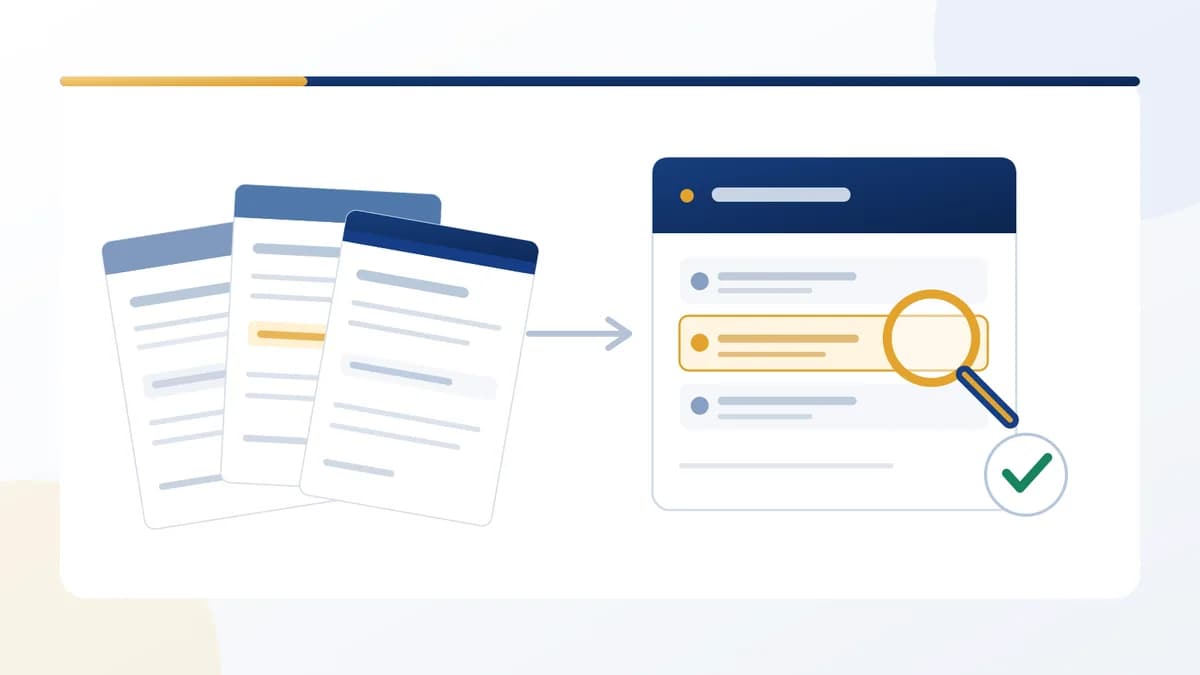
With AI assistance, the proposed workflow extracts bid details into a common comparison sheet, links each figure to its source and flags missing or inconsistent terms. A buyer checks the extracted information and evaluates quality, delivery risk, eligibility and total cost—not price alone.
Calculation: 40 × (60 − 35) ÷ 60 = 16.7 hours of potential monthly capacity
This is not a verified saving or a cash benefit. The time reduction is a hypothesis until tested on representative packages, including incomplete bids and unusual contract terms.
What the Pilot Must Prove
Compare pilot results with the manual baseline and record significant errors, not just averages. Assess tool fees, integration, training and ongoing review costs before claiming value.
Expand only if accuracy and controls remain acceptable and the net operational benefit justifies the expense. That is the real test of procurement automation, rather than the number of tasks the system performs.
Risks of AI in Procurement and the Controls That Matter
Control the risks of AI in procurement before allowing systems to influence supplier selection, contract terms or payments. The closer AI comes to a binding decision, the more important reliable evidence, clear authority limits and traceable actions become.
Incorrect or Fabricated Outputs
Verify extracted prices, obligations and recommendations against original contracts and quotations.
Confidential Data Exposure
Use approved environments, restrict access and establish rules for sharing supplier and commercial data.
Biased Supplier Assessment
Apply documented evaluation criteria and require human review of decisions affecting supplier eligibility or selection.
Poor Data Quality
Check supplier records, inconsistent classifications and missing information before relying on model outputs.
Unauthorised AI Actions
Enforce permission limits, segregation of duties, human approval and auditable activity logs.
Three principles matter in practice.
The voluntary NIST AI Risk Management Framework provides a useful basis for managing these risks. Its generative AI guidance also addresses unreliable outputs and information security.
Effective controls should reflect the potential consequences of each decision, rather than treating every AI-assisted task as equally risky.
How to Implement AI in Procurement and Measure Results
Implement AI in procurement by testing one defined workflow against its existing performance. These five steps help turn a promising tool into a controlled, measurable improvement.
Select One High-Value Procurement Workflow
Choose a process with a documented problem, such as slow quotation reviews, frequent classification errors or inconsistent supplier records. Establish the current processing time, error rate and workload. Check whether straightforward procurement automation could solve the problem at lower cost.
Assess Data Readiness
Identify the documents, systems and fields the proposed tool requires. Check completeness, accuracy, access permissions and whether records can be linked reliably.
In a June 2026 McKinsey survey of 200 senior procurement leaders, 30% selected data quality as the biggest barrier to achieving returns from generative AI investments. This highlights a readiness challenge, not a project failure rate.
Evaluate Tools, Permissions and Ownership
Assess AI procurement tools against your actual workflow: integration with purchasing systems, data security and retention, source traceability, audit logs and total operating cost. Assign an accountable process owner and define which actions require human approval. Avoid purchasing features the team cannot govern or use.
Run a Controlled Pilot Against a Baseline
Test representative transactions, including incomplete or unusual cases. Measure the whole process, including staff corrections, rather than the AI's response time alone.
Set acceptance thresholds before the pilot and record material errors separately from averages.
Scale Only When Results Justify It
Compare results with the baseline and simpler alternatives. Expand only when accuracy, control effectiveness and net benefit meet agreed criteria. Train users, assign ongoing monitoring responsibilities and reassess performance as suppliers, documents and purchasing patterns change.
Develop Practical AI Procurement Skills with LOTC
Measure the value of AI in procurement through better decisions and demonstrable improvements not simply faster processing. Achieving this requires professionals who can identify worthwhile use cases, distinguish AI from conventional automation and assess whether their data supports reliable results.
They must also challenge AI outputs, maintain procurement controls and measure pilot performance before expanding implementation.
The AI for Procurement, Supply Chain and Purchasing course from London Optimum Training & Consultancy develops these capabilities through applications in spend analysis, supplier management, contracts and purchasing, alongside data readiness and performance measurement.
Effective AI adoption depends on procurement judgement as much as technology. Contact our team on WhatsApp to explore suitable training.
To discuss training for your team, contact LOTC on WhatsApp.