How to Write a Project Proposal: Format, Example & Template
A project proposal can fail to secure approval even when the idea behind it could improve business performance. Decision-makers need more than a promising solution; they need evidence that the problem matters, the investment is justified and the project is achievable.
A convincing proposal answers four questions: Why is the project needed? What measurable results will it deliver? What will it cost, how long will it take and what could go wrong? Most importantly, what decision is required?
This guide explains how to write a project proposal, structure its content and justify costs and timelines, with a practical business example and a reusable template.
What Is a Project Proposal, and When Do You Need One?
A project proposal is a document that presents a business problem or opportunity, a recommended solution, expected benefits and estimated costs, resources, timescales and risks. Its purpose is to help decision-makers assess whether an initiative deserves approval or investment.
Project proposal writing is particularly useful when requesting funding, allocating a project team or seeking sponsorship for an operational improvement. The document should establish both the value of the initiative and the decision being requested.
Three related documents serve different purposes:
Project Proposal
Justifies a proposed initiative and requests approval or resources.
Business Case
Evaluates strategic and economic justification, including costs, benefits and alternatives.
Formally authorises a project and establishes high-level responsibilities and authority.
These documents may overlap or be combined depending on the organisation's governance approach. A proposal makes the case for proceeding; it does not automatically authorise the project.
Project Proposal Format: What Should It Include?
Choose a project proposal format that matches the project's scale, intended readers and approval process. A clear project proposal structure helps decision-makers assess the need, value, feasibility and funding request.
Executive Summary
The problem, proposed solution, expected value and decision requested.
Problem and Business Need
The current issue, its impact and evidence supporting the need for change.
Objectives and Success Criteria
Measurable outcomes, targets and how success will be assessed.
Scope and Deliverables
What will be delivered, what is excluded and key boundaries.
Approach / Methodology
How the work will be undertaken and why that approach fits.
Timeline and Resources
Major milestones, required people and critical dependencies.
Budget and Expected Benefits
Estimated costs, expected returns or operational gains, and assumptions.
Risks and Assumptions
What could undermine delivery or the expected benefits.
Approval Request
The funding, resources or authorisation sought from the reader.
Use this project proposal outline as a decision framework, not a rigid template. A small improvement may need one page; major investments may require supporting analysis.
Distinguish deliverables from business outcomes: installing a system is a deliverable; reducing processing time is an outcome that must be measured. Above all, make the proposed scope, costs and requested decision explicit.
How to Write a Project Proposal Step by Step
How to write a project proposal starts with establishing a credible reason to invest, not describing a solution. Use these six steps to build a case that decision-makers can assess.
1. Establish the Problem and Its Baseline
Define the business issue in measurable terms: delayed approvals, avoidable costs or unmet demand. Use operational records from a stated period to establish the current baseline. Explain the consequences of doing nothing before proposing a remedy.
2. Define Measurable Objectives and Project Scope
Set project proposal objectives with a metric, target and deadline, such as reducing average ticket-routing time from eight to two minutes by the end of the pilot in week 10, before full rollout.
Identify deliverables, exclusions and the conditions for success. Completing a system installation is not the same as achieving the intended improvement.
3. Compare Options Before Selecting a Solution
Consider maintaining the current process, making a smaller operational change and implementing the proposed project. Compare each option against expected benefits, cost, delivery time, risk and feasibility. Explain the preferred option's value using APM's benefits–costs–risks approach.
4. Explain the Proposed Methodology and Responsibilities
Describe the project proposal methodology in practical terms: a pilot followed by staged rollout, for example, if performance must be tested before wider deployment. Identify delivery owners, approval responsibilities and dependencies on suppliers, existing systems or shared staff.
5. Support the Business Value with Evidence
Link forecast benefits to the baseline and disclose the assumptions behind them. Distinguish measurable cash savings from released staff capacity or better service. Specify who will track each benefit and when.
According to PMI's 2025 research, only 50% of projects met its broader, value-based definition of success. The findings reinforce why proposals should define measurable business outcomes rather than treating delivery on time and within budget as sufficient evidence of success.
6. Write the Executive Summary Last and Make the Decision Clear
Once the evidence, budget and timeline are established, summarise the need, preferred option, anticipated value and principal risks for the approving audience. Finish with a precise request: funding, named resources or permission to proceed to a defined next stage.
Strong project proposal writing makes the rationale and trade-offs visible, so approval rests on evidence rather than enthusiasm.
Build a Credible Project Proposal Budget and Timeline
A credible project proposal budget and project proposal timeline show decision-makers the required commitment, plausible benefits and uncertainties.
Estimate Project Costs and Expected Benefits
Separate one-off implementation costs from recurring operating costs. Include internal staff time, suppliers, licences, integration and training where relevant. Base significant estimates on supplier quotations, comparable past expenditure or expected hours and rates. Record exclusions; base contingency allowances on identified risks, not an unexplained percentage.
Present expected benefits alongside costs, but distinguish cash savings from operational improvements. Releasing 1,000 staff hours annually creates capacity; it does not automatically save money. Claim financial savings only if expenditure will fall or a demonstrable future cost will be avoided. Explain how benefits will be measured, and avoid presenting ROI or payback figures without defensible assumptions about timing and ongoing costs.
The Association for Project Management emphasises affordability, whole-life costs and expected returns in investment decisions. For estimating methods and uncertainty, see LOTC's Project Cost Estimation.
Present a Realistic Timeline and Key Dependencies
Build the timeline around phases, milestones and approval gates rather than a detailed task-by-task schedule. Give indicative start and completion dates, required resources and dependencies such as supplier availability, data access or management sign-off.
State which assumptions underpin the dates and who controls critical decisions. Where requirements remain uncertain, show an indicative range rather than false precision. A pilot with a review gate may be appropriate to the project proposal methodology before wider rollout.
Together, the budget and timeline should make the proposed commitment and the conditions for delivering it clear enough to challenge.
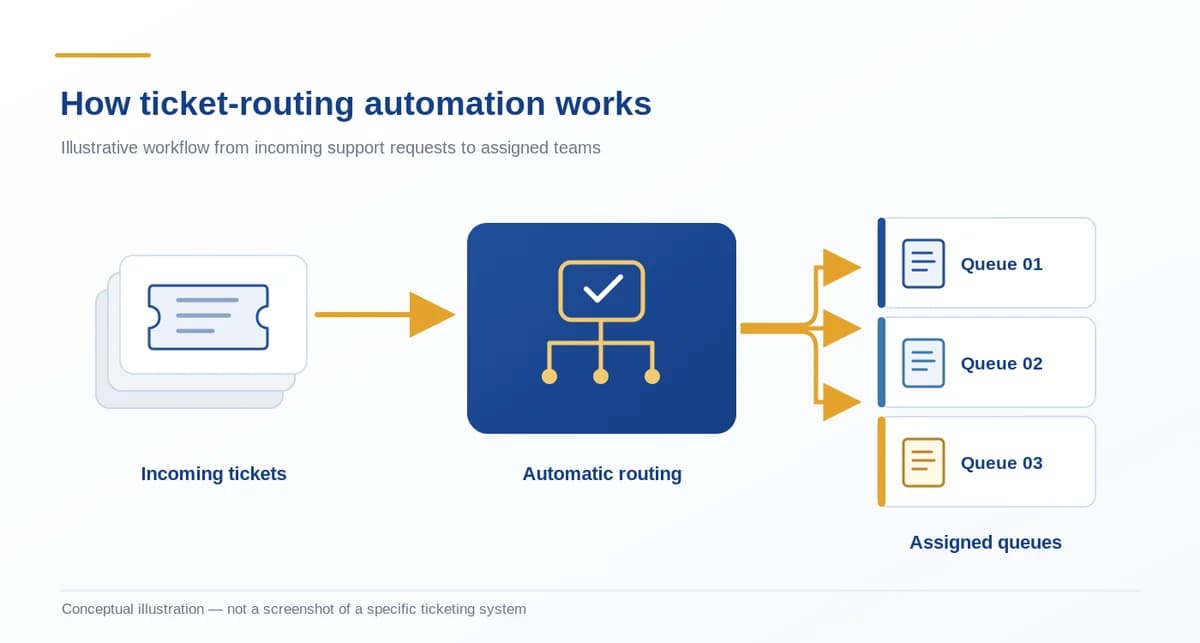
Worked Project Proposal Example: Ticket-Routing Automation
This fictional project proposal example shows how to assess a proposed investment without disguising assumptions as facts. All figures are illustrative.
Project Proposal Executive Summary Example
Proposed initiative: A medium-sized company handles approximately 12,000 support tickets annually, with staff spending eight minutes on average classifying and routing each ticket. We propose a 12-week automation project targeting two minutes per ticket without reducing routing accuracy.
Expected value: At unchanged volumes, the system could release 1,200 staff hours annually. This represents additional capacity, not guaranteed cash savings. Direct implementation is estimated at £32,000, with £5,000 in annual support costs; internal staff effort is not yet costed.
Approval requested: Grant conditional approval to complete the internal-cost assessment and compare manual improvement with automation. Release funding following that review, and authorise full rollout only if pilot results meet agreed performance criteria.
Simple Project Proposal Example: Budget, Timeline and Expected Value
Scope and accountability: Integrate automated classification and routing with the existing ticketing system, starting with eligible incoming tickets. Exclude wider service redesign and headcount reductions. The Customer Service Manager sponsors the project and owns benefit measurement; IT leads delivery, with Finance validating costs.
Options considered:
Options considered:
Keep current process
Cost and Expected Outcome
No new implementation spending; manual routing stays near eight minutes per ticket.
Main Limitation
Existing workload continues.
Improve manual routing
Cost and Expected Outcome
Cost and time improvement require a small process trial.
Main Limitation
Benefits remain unquantified.
Automate routing
Cost and Expected Outcome
£32,000 direct implementation, plus £5,000 annual support; two-minute target.
Main Limitation
Integration, data quality and adoption risks.
Automation is provisionally preferred for its potential capacity benefit, not because the alternatives have been fully costed.
Calculation: 12,000 × (8 − 2) ÷ 60 = 1,200 hours; 1,200 × £25 = £30,000 of notional capacity value, not realised savings.
The calculation assumes all tickets are eligible and volumes remain stable. A cash return or payback cannot be claimed without evidence of avoided or reduced expenditure.
Budget: £18,000 for configuration, £8,000 for integration and testing, and £6,000 for training and the pilot. These illustrative amounts cover directly priced activities; internal staff time is not included and must be estimated before final authorisation.
Timeline: Weeks 1–2, discovery and baseline checks; weeks 3–8, configuration and testing; weeks 9–10, pilot; weeks 11–12, rollout only after approval.
Pilot gate: Assess routing time, misrouting rate and staff adoption. Address poor ticket data through validation checks and adoption risks through training. Proceed only if the two-minute target is supported without worsening the validated baseline misrouting rate.
Copyable Project Proposal Template and Final Checklist
Use this project proposal template as a working document, not a fixed approval standard. Replace each prompt with evidence appropriate to your organisation and decision-makers.
Copyable Project Proposal Template
Project Details
- Project Title: [Enter project name]
- Sponsor / Prepared by / Date: [Names, roles and submission date]
Executive Summary: [Describe the need, solution, expected value and decision requested in one short paragraph.]
Business Problem and Baseline: [State current performance, evidence source and measurement period.]
Objectives and Success Measures: [Set measurable targets, dates, owners and how benefits will be verified.]
Scope and Deliverables: [List what is included, excluded and expected outputs.]
Proposed Methodology: [Explain the chosen approach, alternatives considered and stage gates.]
Resources and Timeline: [Name required roles, key milestones and dependencies.]
Budget and Expected Benefits: [Separate one-off and recurring costs; give estimate sources, assumptions and financial versus operational benefits.]
Risks and Mitigation: [Identify major uncertainties, likelihood or impact, and planned responses.]
Approval Requested: [Specify the amount, resources, authorising person and any conditions for release.]
Project Proposal Checklist Before Submission
Use this project proposal checklist to test whether the document supports a decision:
Is the business need evidenced by a dated baseline?
Are objectives measurable and connected to business outcomes?
Have plausible alternatives, including doing nothing, been considered?
Are scope, exclusions and deliverables unambiguous?
Do cost and benefit estimates disclose assumptions and uncertainty?
Can available resources meet the stated timeline and dependencies?
Does the request specify the decision, amount, risk conditions and accountable approver?
A useful project proposal sample makes uncertainty visible rather than dressing estimates as guarantees. If decision-makers cannot trace the problem to the proposed investment and its expected results, revise the project proposal outline before submission.
Strengthen Project Proposal Writing Skills with LOTC
A strong project proposal does not simply advocate an attractive idea. It gives decision-makers a clear basis for comparing options, weighing risks and committing resources to outcomes worth pursuing.
That takes more than a polished template. Project professionals must translate business needs into measurable objectives, define realistic scope, challenge cost and benefit assumptions, build achievable timelines and present recommendations that withstand scrutiny.
LOTC’s Effective Project Proposal and Report Writing course develops these skills through structured proposal writing, credible project justification and communicating recommendations to stakeholders.
The goal is not approval at any cost; it is a decision grounded in evidence. Strengthen your capabilities with London Optimum Training & Consultancy or speak to our team on WhatsApp about suitable training.